
Last updated: October 2026
How to Care for an Area Rug Between Professional Cleanings
A rug takes more punishment than almost anything else in a room: shoes, chair legs, paws, spilled coffee and full sunlight. The good news is that most of what keeps one looking good takes a few minutes a week. Here's how we'd look after our own rugs, and how to tell when a rug needs more than you can give it at home.
- Vacuum regularly, and switch the brush roll off for wool, silk, shag and anything with fringe.
- Turn the rug end for end every few months so sunlight and footsteps spread out evenly.
- For spills, blot with a white towel, keep liquid to a minimum and test any cleaner on a hidden corner first.
- A rug pad keeps the rug flat and in place, and it takes some of the wear off the fibers.
- When a rug needs a professional clean, we clean it in your home, on your own floor. It never leaves the house.
Vacuuming does the most good
Grit is what wears a rug out. Sand and fine dirt sink to the bottom of the pile, and every footstep grinds them against the fibers. Pulling that grit out before it does its damage is the single most useful thing you can do for a rug.
How often depends on the room. A rug by the back door or under the kitchen table can use a pass every few days, while one in a guest room is fine once a week. Go slowly, so the vacuum has time to lift what's down low, and run it along the direction the pile lies.
Wool, silk, shaggy and handmade rugs do better with the brush roll switched off or with a suction-only head, because a spinning brush can fuzz and pull their fibers. A few times a year, give the underside a pass as well. Grit works its way down through a rug, and the back is where it collects.
Keep the vacuum off the fringe. The brush can catch those threads and pull them loose, so stop at the edge, or lay the fringe aside with your hand as you go. Small rugs and bath mats can simply be carried outside and given a good shake.
Rotate it, and mind the sunlight
Most rugs have a busy end and a quiet end: one near the door or the sofa, the other tucked under furniture. Turning the rug end for end every few months spreads the wear, so one half doesn't look tired years before the other.
Sunlight is the other reason to rotate. Strong light slowly fades dye, and a rug that sits in the same bright patch for years can end up two colors. Rotating evens that out, and drawing the blinds during the brightest hours slows it down. Fading can't be cleaned away, so prevention is the only real fix.
Rug pads and heavy furniture
A rug pad keeps the rug from sliding and bunching, which makes it safer to walk on. It also cushions the fibers, so they wear more slowly. Pick one cut a little smaller than the rug, so the edges lie flat against the floor.
Heavy furniture presses the pile flat over time. Furniture cups under the legs spread the weight out, and nudging the piece an inch or two now and then keeps a dent from setting. Many dents relax on their own once the weight comes off, and a minute of brushing the pile up with your fingertips speeds that along.
When something spills
With rugs, what you put on a spill matters as much as how fast you get to it. Many rugs, wool and handmade ones especially, carry dyes that can move if the rug gets too wet. So the rule is plenty of blotting and very little liquid.
Blot right away
Press a clean white towel on the spill, lift, and press again with a dry part of it. White matters: a colored towel can leave its own dye behind.
Work inward
Blot from the outer edge of the spill toward its middle, so you don't push it out into a bigger ring.
Damp, never wet
If something is still there, dampen a cloth with cool water and blot again. Pouring liquid onto a rug is how small spills turn into big ones.
Test before you treat
Try any cleaner on a hidden corner first and press a white cloth on that spot. If color comes off on the cloth, stop there.
Dry it flat
Prop a corner up so air reaches both sides, and leave the rug flat until it's completely dry.
Leave the scrub brush in the closet. Scrubbing untwists the fibers and leaves a fuzzy patch that looks worse than the spill did. Keep heat and bleach away from it too, and skip soapy carpet shampoo, which leaves a sticky film behind that pulls in fresh dirt.
Silk and viscose rugs are the exception to nearly all of this. Plain water can leave a mark on them, so blot gently with a dry towel and call us instead of trying anything stronger.
Pets and rugs
Urine on a rug goes straight through. It soaks the fibers and passes through the back to the floor underneath, so lift the corner and blot both sides if you can. An odor that returns after you've cleaned it means the urine went deeper than your cleaning did.
Our pet odor treatment goes after the urine itself with enzymes, at whatever depth it reached, and our 100% pet odor removal guarantee stands behind it. For the first few minutes after an accident, our pet stain and odor guide walks you through it step by step.
Fringe and edges
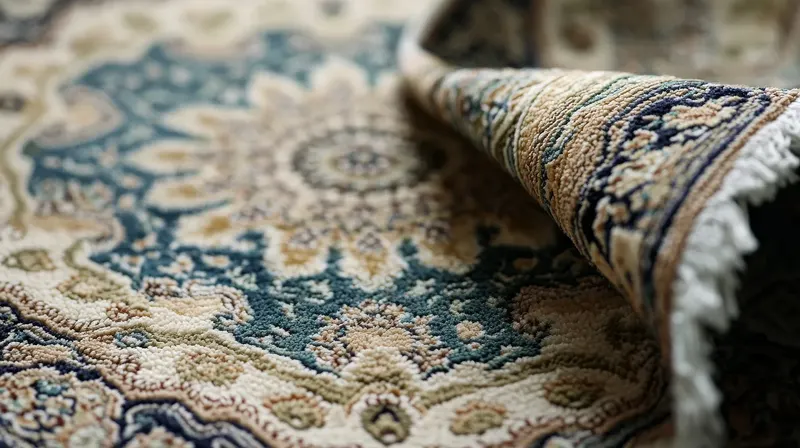
On a hand-knotted rug, the fringe isn't trim sewn on afterward. It's the ends of the threads the whole rug was woven on, so a pulled fringe thread is a small piece of the rug's structure coming loose. Never tug a loose one or trim it flush; tuck it under and point it out at your next cleaning.
The edges, often called bindings, take a beating from vacuums and feet. Keep the vacuum's wheels off them, and if a binding starts to come loose, move the rug out of heavy traffic until it can be repaired.

Signs a rug is ready for a professional clean
Rugs rarely announce it all at once. These are the signs we'd look for:
- The path people walk across it looks darker than the edges.
- The colors look flat next to the part that sits under furniture.
- Fine grit shows up on the floor when you lift a corner.
- It smells when you sit or lie on it, especially in a home with pets.
For a rug in a busy room, about once a year is a good rhythm, and more often with pets or small kids. A rug in a quiet bedroom can go longer. Our guide to how often to clean goes through the reasoning household by household.
How we clean rugs in your home
We clean every rug right where it lives, on your own floor. Nothing gets rolled up, carried out to a van or kept somewhere for a week, and when the technician leaves, the rug is still in its spot.
Before anything touches it, the technician checks what the rug is made of, anywhere from a machine-made synthetic to hand-knotted wool, and chooses the method to match. The fringe and the edges get their own attention, and you look over the result together before we go.
Rug cleaning starts at $1 a square foot, the fiber can change the final figure, and you'll have a written price before work begins. The guarantee is the same one behind everything else we clean. Love the result or it's free, and any spot you'd like redone gets a free second visit.
Our rug cleaning page has more on the service and our pricing page lists the rest of our prices. To book, pick a time online and we'll get back to you to confirm it.
Rug care questions
Do I need to roll up my rug and drop it off somewhere to have it cleaned?
No. We clean rugs inside your home, right on your own floor, so there's nothing to roll up or haul away, and no week of waiting to get it back. The technician checks the fiber first, cleans the rug where it lies and looks over the result with you before leaving. You get a written price before any of it starts.
How often should I turn my area rug around?
Every three to six months suits most rugs, and more often if the rug gets strong sun or sits across a busy walkway. Turn it end for end so the worn side moves to the quiet spot. A large rug is a two-person job: lift it, don't drag it, so the rug pad underneath stays put and the corners don't fold.
Is a rug pad really worth buying?
For most rugs, yes. A good rug pad stops the rug from sliding underfoot and keeps the corners flat. It also cushions the fibers, so they wear more slowly. Choose one cut slightly smaller than the rug, so the edges lie flat on the floor. If the rug sits on top of wall-to-wall carpet, look for a pad made for that, since the usual kind is meant for bare floors.
Some color ran when I cleaned a spill on my rug. What now?
Stop adding liquid right away. Blot the area with dry white towels, keep the rug flat and let it dry with air moving across it. Don't try a second product on it. Then call us: the technician will look at it, tell you honestly what can be improved and what can't, and give you a written price before anything is done.
Can you clean a silk rug without taking it out of our house?
Yes. Every rug we handle, silk and wool included, gets cleaned at your place, on your own floor. Silk needs a gentler approach than synthetics, so the fiber gets checked before any method is chosen. Until we get there, keep water away from a silk rug entirely: blot spills with a dry towel and leave the rest to us.
Satisfaction guaranteed on every visit.
Low-moisture deep clean, dry in about an hour · Love the clean or it's free.